AWS Shows Enterprises How to Track Bedrock AI Costs by User
Enterprise AI

AWS Shows Enterprises How to Track Bedrock AI Costs by User

AWS Machine Learning BlogNov 14, 2026

AWS outlined how Bedrock customers can attribute inference costs to individual users and apply usage controls across AI coding and productivity tools.

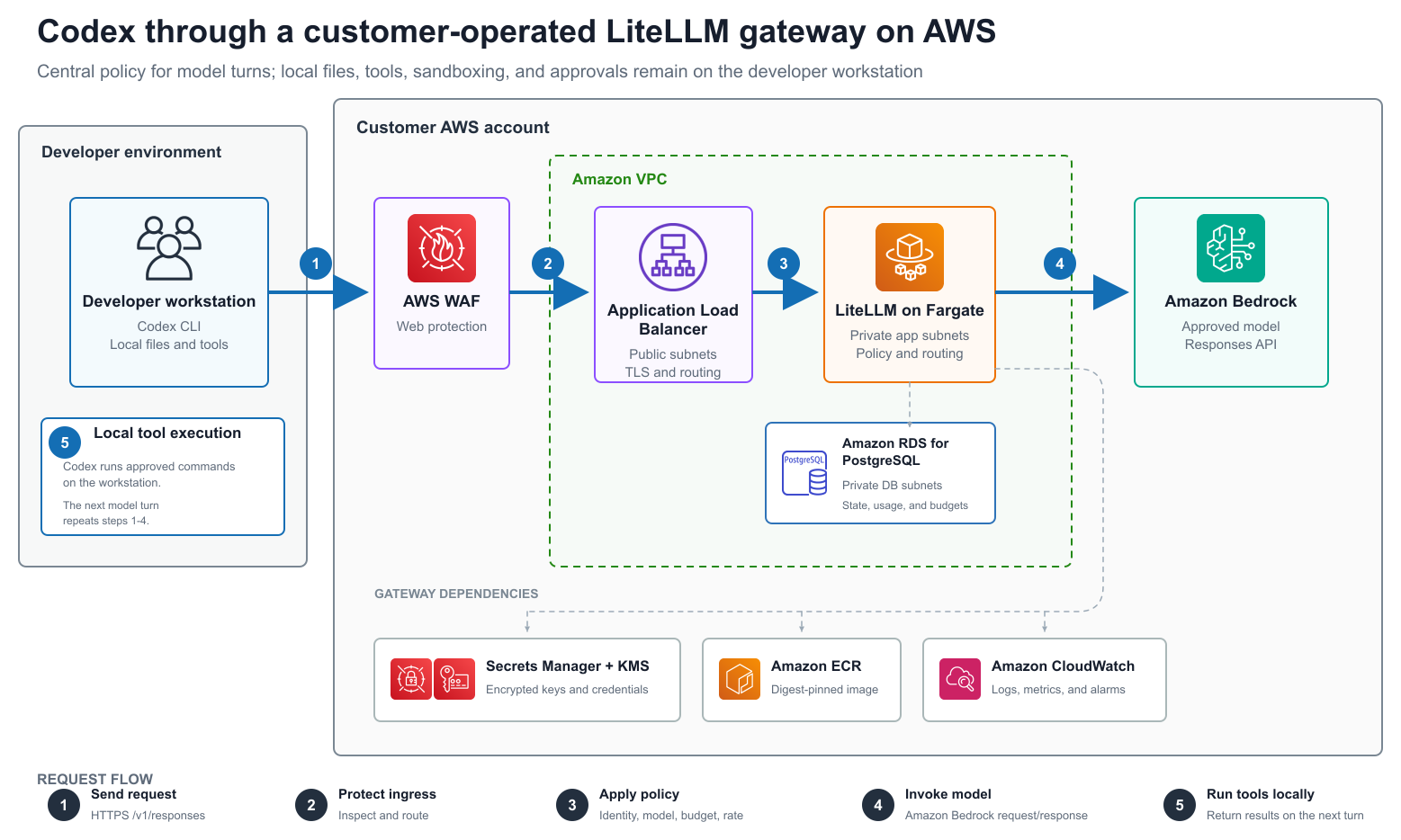
An AWS Machine Learning post published November 13, 2026, explains how organizations can trace Amazon Bedrock inference spending to the IAM identity behind each request. The approach is intended for AI coding and productivity tools that route model calls through Bedrock, including Claude Code, Claude Desktop, OpenAI Codex, ChatGPT Work, and OpenCode.

Bedrock records the caller’s IAM identity at the inference endpoint, without requiring changes to API calls. With federated users, IAM Identity Center can provide distinct sign-in identities; session tags such as team or cost center can add organizational detail. The identity and tags can then appear in AWS Cost and Usage Reports 2.0 (CUR 2.0) and AWS Cost Explorer. The post describes support for both the bedrock-runtime and bedrock-mantle endpoints.

There is an important limit to the billing data: CUR reports usage by principal and usage type for each export interval—hourly or daily—but does not provide a cost for every individual request. Organizations needing prompt-level detail can use model invocation logs or request metadata tagging. AWS also describes using Amazon Athena to query the resulting data and connecting dashboards to services such as Quick Sight or Grafana.

The post outlines several ways to impose usage limits, each with different trade-offs. AWS Budgets can trigger an action after a threshold is crossed, but billing updates may lag: budgets update up to three times daily, and Bedrock charges can take up to 24 hours to appear. CloudWatch alarms paired with AWS Lambda can reduce enforcement latency to one to five minutes, while requiring inference profiles or per-user roles for user-level granularity. DynamoDB-based quotas act at credential refresh, and a gateway can block individual requests at the cost of added complexity and latency.

AWS’s suggested approach is to use CUR 2.0 for reporting and layer faster enforcement mechanisms with budgets as a backstop. The attribution depends on users authenticating as themselves; shared roles or gateway identities can otherwise consolidate usage under one principal.

Industry Impact

More accountable AI spending

Enterprise software, AI coding and productivity tools

Overview

AWS’s guidance gives organizations a way to connect Bedrock inference spending with the IAM identity making each request, helping finance and technology teams allocate costs by user or organizational tags. This can make budgets for AI coding and productivity tools more visible without changing API calls. However, CUR 2.0 reports costs by principal and interval—not by individual request—and budget updates can lag. Teams that need tighter control must weigh faster CloudWatch, Lambda, credential-refresh or gateway approaches against added implementation complexity and latency.

Key Impact Points

Per-user attribution can clarify who or which team is driving Bedrock inference costs.

CUR 2.0 and Cost Explorer support reporting, but do not provide per-request cost detail.

Faster enforcement options can reduce exposure to overspending, with trade-offs in latency and operational complexity.

Opportunities

Bedrock cost governance

Enterprise AI operations and software development

Organizations using Bedrock through AI coding and productivity tools can build a cost-governance workflow around identity-based attribution. CUR 2.0 and Cost Explorer can support user- or team-level reporting, while Athena and dashboard tools can help teams analyze the exported data. Where delayed budget updates are not sufficient, teams can evaluate CloudWatch alarms with Lambda, credential-refresh quotas, or request-blocking gateways, matching enforcement speed to operational needs. The article supports an internal cost-management opportunity, not a new revenue product: per-request cost visibility still requires invocation logs or request metadata, and tighter controls may add complexity or latency.

  • User-level Bedrock cost reporting and controls

    Problem: Organizations may struggle to attribute Bedrock inference spending to individual users or teams, and billing reports do not show cost for every request.

    Solution: Use distinct IAM identities and session tags with CUR 2.0 and Cost Explorer for reporting; add invocation logs or request metadata when prompt-level detail is needed, and layer faster enforcement controls where appropriate.

    Target Users: Organizations routing AI coding and productivity tool requests through Bedrock.

    Business Value: Better cost allocation and visibility, with usage controls suited to the organization’s required enforcement speed.

    Revenue Potential: No direct revenue opportunity is specified; the supported value is internal cost management.

Reference link

https://aws.amazon.com/blogs/machine-learning/cost-attribution-and-controls-for-ai-developer-and-productivity-tools-on-amazon-bedrock

Image Source Link

https://d2908q01vomqb2.cloudfront.net/f1f836cb4ea6efb2a0b1b99f41ad8b103eff4b59/2024/11/01/inference-profile-cost-allocation-1.jpg

Community Discussion (0)

No discussions yet. Be the first to start the conversation!