
AWS Shows How LangGraph Can Automate Daily Dependency Security Checks
AI Cybersecurity

AWS Shows How LangGraph Can Automate Daily Dependency Security Checks

AWS Machine LearningNov 11, 2026

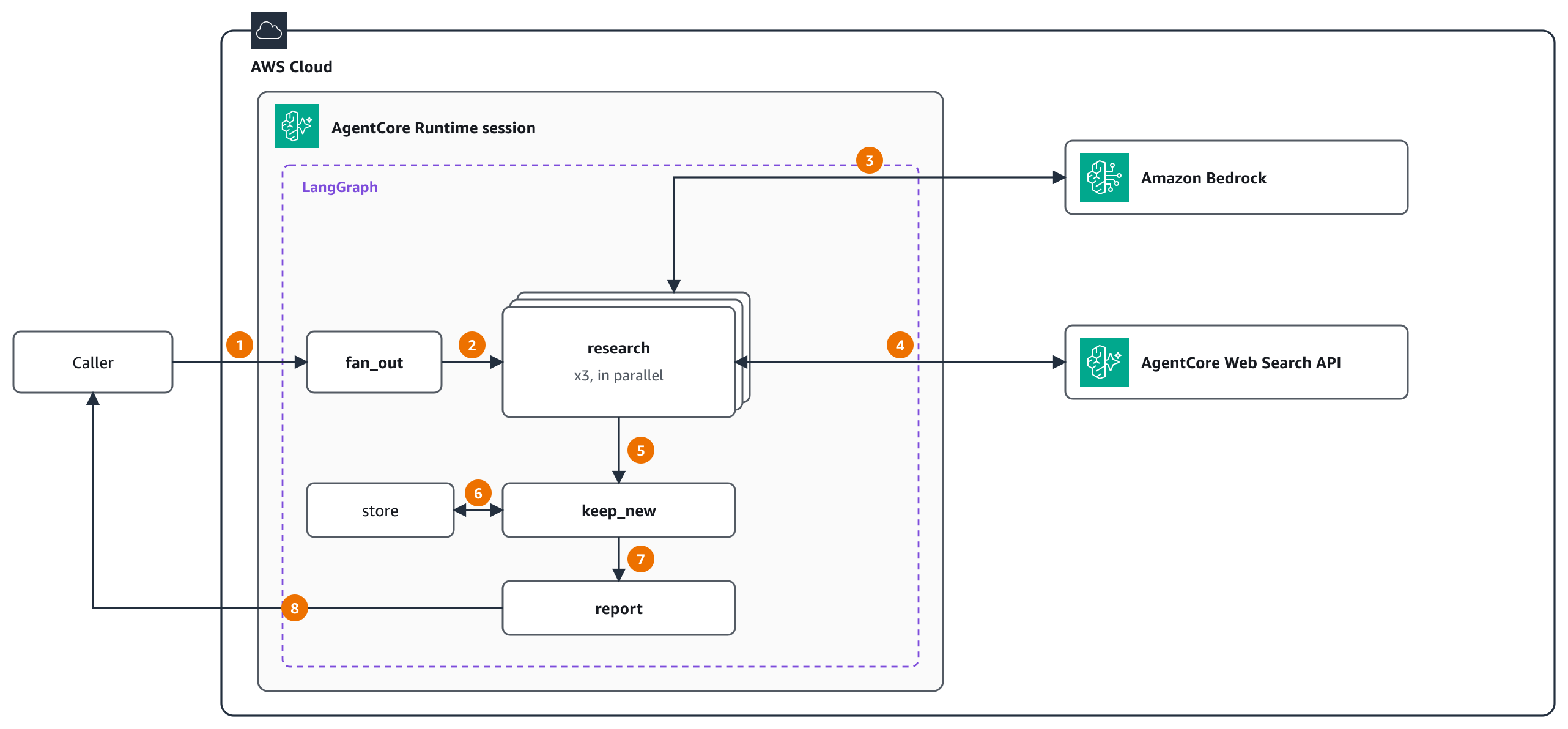
AWS outlined a LangGraph security monitor that searches npm, PyPI and container-image sources, checks evidence and suppresses previously reported findings.

AWS published a technical guide on November 10, 2026, showing how to build a daily open-source dependency watcher with LangGraph and the Web Search API in Amazon Bedrock AgentCore. The example monitors npm packages, PyPI packages, and container base images for newly relevant security information.

The workflow runs a separate research branch for each ecosystem in parallel. Each branch uses a Claude model through Amazon Bedrock to identify search queries and produce structured findings. Code, rather than the model, sets key controls: a publication-date window, excluded domains, and a limit of four searches per branch. The guide says one run can make at most 12 searches, and that search and model calls are billed per use.

Before results are reported, the program checks that each cited URL came from its searches, that the source names the package, that any CVE or advisory identifier appears in the source, and that the publication date falls within the chosen window. A LangGraph store then filters out findings already reported. In AWS’s example run, 12 searches returned 80 sources; the three branches completed in 36 seconds, compared with 99 seconds when their durations were added together. Four findings passed the evidence checks, and two were new to the store.

AWS cautions that these checks do not validate every security claim, including severity, exploitation status, affected versions, or recommended action. The guide advises confirming results against authoritative vulnerability feeds and having a person review findings before acting on them.

For recurring operation, AWS describes hosting the graph on AgentCore Runtime and replacing the in-memory store with durable storage. AgentCore Gateway is another option when a platform team needs to apply a shared source policy across agents.

Industry Impact

Faster dependency threat monitoring

Cybersecurity, software development, cloud operations

Overview

AWS’s example shows how teams can use parallel AI research branches to scan npm, PyPI and container-image sources for recent security information. In the sample run, the branches finished in 36 seconds, and evidence checks reduced 80 sources to four findings, with two not previously reported. This could help security and development teams review emerging dependency risks more efficiently. However, the checks do not verify key claims such as severity or affected versions, so authoritative vulnerability feeds and human review remain essential.

Key Impact Points

Parallel searches can shorten the time needed to gather dependency security information across three ecosystems.

Code-enforced source, date and evidence checks help filter findings before they reach reviewers.

The workflow does not establish the accuracy of every security claim; human validation remains necessary.

Opportunities

Operationalize dependency monitoring

Cybersecurity, software development, cloud operations

Platform and security teams can adapt the example into a recurring internal workflow that collects recent dependency advisories, applies evidence checks and suppresses previously reported findings. AWS describes hosting the graph on AgentCore Runtime and replacing its in-memory store with durable storage; AgentCore Gateway is an option for applying a shared source policy across agents. This creates a practical route from a technical example to ongoing monitoring, but it does not remove the need for review against authoritative feeds. Search and model calls are billed per use, and the article specifies no commercial revenue model or quantified savings.

  • Recurring dependency security monitoring

    Problem: Security teams need to track newly relevant information across npm packages, PyPI packages and container base images, while avoiding repeated alerts.

    Solution: Adapt the LangGraph workflow to run on a recurring schedule, retain findings in durable storage and apply shared source policies where needed.

    Target Users: Cybersecurity professionals and software development teams.

    Business Value: Consolidates research and filters previously reported findings, while keeping evidence review and human validation in the process.

    Revenue Potential: No direct revenue model is specified; search and model calls incur per-use charges.

Reference link

https://aws.amazon.com/blogs/machine-learning/build-a-daily-dependency-watcher-with-langgraph-and-amazon-bedrock-agentcore-web-search

Image Source Link

https://d2908q01vomqb2.cloudfront.net/f1f836cb4ea6efb2a0b1b99f41ad8b103eff4b59/2026/11/06/ML-22037-4.png

Community Discussion (0)

Loading discussions...