
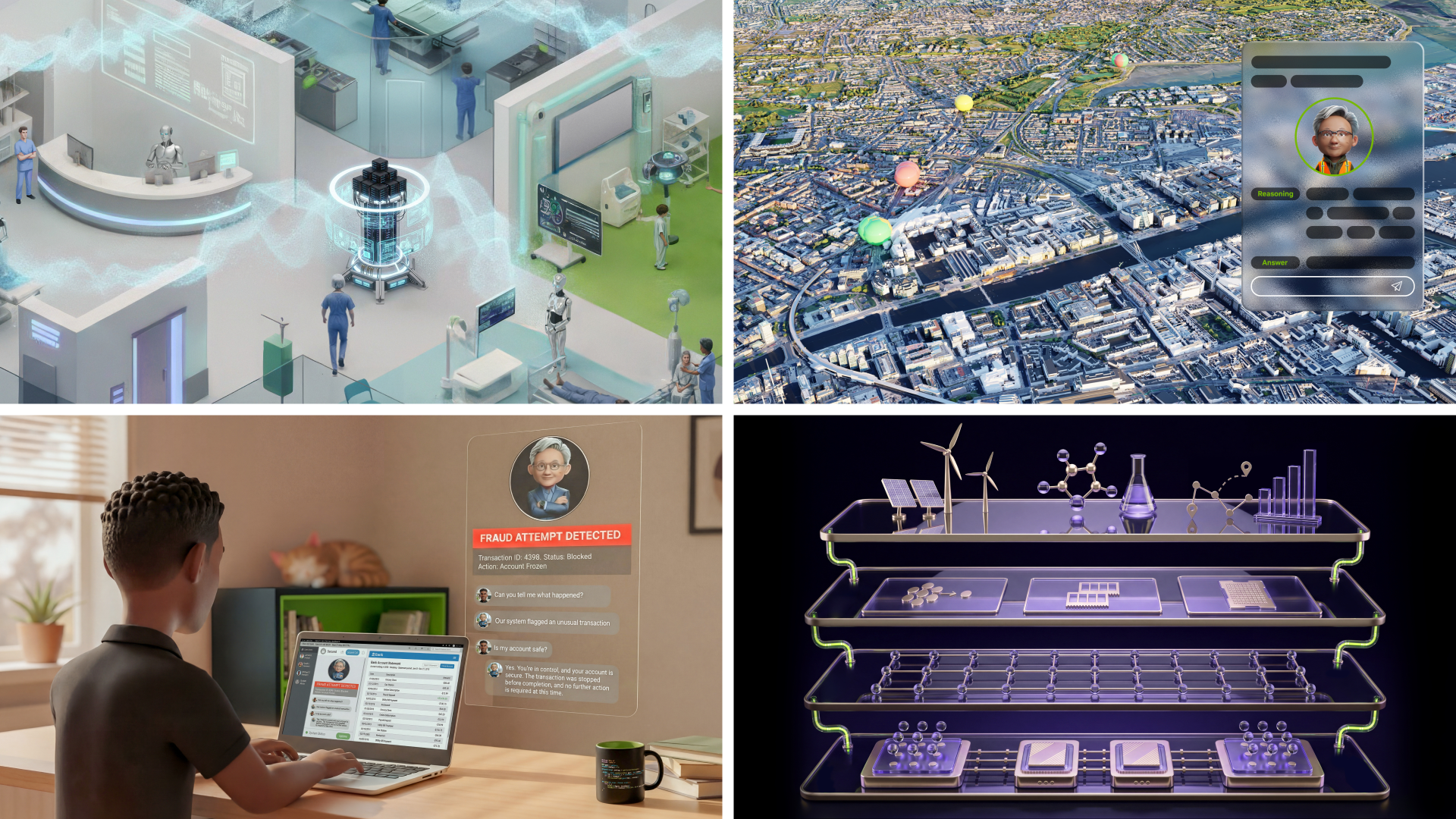
The companies plan to combine NVIDIA computing and AI technologies with Danaher instruments and laboratory workflows to connect models with experimental data.
Danaher and NVIDIA announced a collaboration to bring AI and accelerated computing into scientific instruments and laboratory workflows. The companies say they aim to create a feedback loop in which models help researchers design experiments, while experimental results inform further modeling. The initial work will focus on a select group of instruments, with possible expansion to more of Danaher’s portfolio.
The planned technology mix includes edge computing, accelerated data analytics, real-time inference and scientific AI models. Danaher cited NVIDIA DGX Spark, RAPIDS and BioNeMo Open Models among the technologies being considered. The partners are also exploring the use of NVIDIA’s Cosmos world models and Omniverse digital twins to support instrument and workflow development. The announcement does not identify specific instruments, launch dates, customer deployments or quantified performance improvements.
The partnership targets a practical bottleneck in applying AI to research: predictions alone do not establish scientific results. Researchers still need experiments and reliable evidence to validate hypotheses. By connecting computational tools with instruments, workflow software and domain expertise, the companies intend to make it easier to move from an AI-generated proposal to a testable experiment and then use the outcome to refine subsequent work.
For Danaher, whose businesses span life sciences and diagnostics, the agreement extends its effort to connect laboratory equipment, data and software. For NVIDIA, it applies its AI infrastructure to scientific research beyond conventional model training and cloud computing. The companies say they intend to preserve customer choice in models, standards and technology providers, a relevant consideration for laboratories with existing systems and varied research requirements.
The announcement is a collaboration plan rather than evidence that autonomous laboratories are already operating at scale. Danaher and NVIDIA describe anticipated benefits, but have not published independent evaluations or specific timelines for deployment. Its significance will depend on whether the integration produces reproducible results, fits existing laboratory operations and earns researcher trust. For now, the first deployments are limited to selected instruments, with broader rollout described only as a possibility.