
Eon centralizes investigation tools, reducing engineer setup from two days to two minutes
AI Agents & Automation

Eon centralizes investigation tools, reducing engineer setup from two days to two minutes

AWS Machine LearningOct 20, 2026

Eon consolidated access to investigation tools across AWS, GCP and Azure through an authenticated AgentCore gateway, cutting engineer onboarding from two days to about two minutes.

Eon has consolidated access to its engineering investigation tools through a single Amazon Bedrock AgentCore gateway, replacing locally run Model Context Protocol (MCP) servers and separate credentials for individual tools. AWS published the implementation details on October 20, 2026. Eon says new engineers can now reach the tools in about two minutes, compared with roughly two days of setup previously.

The company investigates production incidents across AWS, Google Cloud Platform and Microsoft Azure, using systems such as Grafana, Kubernetes and GitHub. Its previous setup required developers to configure and maintain local MCP processes, while the autonomous site reliability engineering agent needed access to many of the same tools as people. Eon says that supporting more than 100 developers and approximately 10,000 sessions exposed operational challenges as the number of tools and users grew.

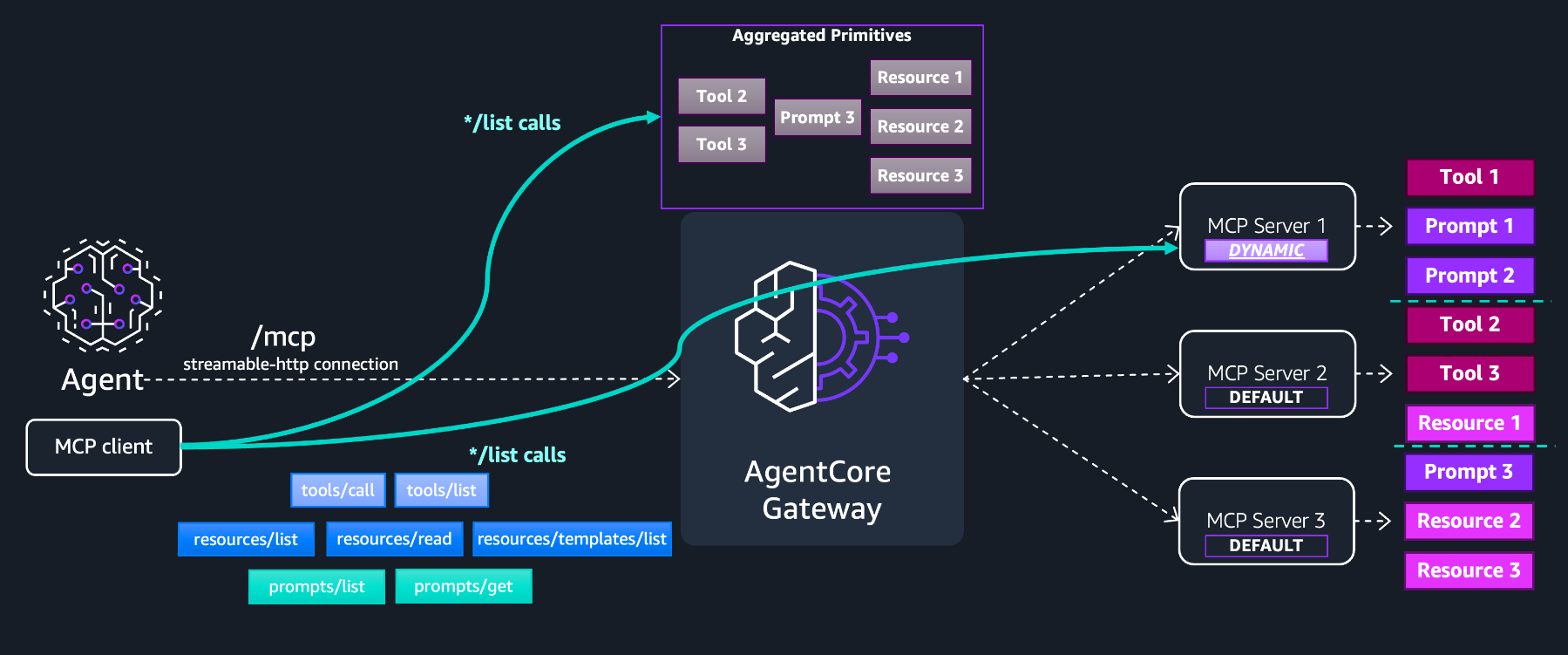
The new arrangement uses AgentCore Gateway as a central access point, with AgentCore Runtime hosting tool connections across multiple AWS accounts. Developers connect from tools including Claude Code, Cursor and OpenAI Codex; Eon’s agent connects with a separate identity. Corporate single sign-on and Amazon Cognito provide authentication. Cedar policies at the gateway determine which users and agents may call specific tools, with production systems restricted to read-only access. Limited write actions, such as commenting on a pull request or ticket, require explicit permissions.

The gateway routes approved requests to dozens of MCP targets that expose hundreds of tools. Eon uses cross-account IAM role assumption for connectivity, avoiding the need to configure VPC peering or PrivateLink for each account. The company also describes using two target-listing modes: one for smaller catalogs that need pre-indexed tool schemas, and a dynamic mode for larger catalogs that would otherwise contribute to policy-size limits. Eon notes that dynamic listing does not provide semantic tool search for those targets.

The system is intended to give engineers and the autonomous agent a shared route to investigation data without giving them identical permissions. AWS’s account describes Eon’s deployment and reported results; it does not establish that the same onboarding gains will apply to other organizations.

Industry Impact

Faster, governed access to investigation tools

Cloud operations, software engineering, enterprise AI

Overview

Eon’s centralized gateway simplifies how engineers and its autonomous SRE agent reach tools spanning AWS, Google Cloud Platform and Microsoft Azure. For software developers, reducing setup from about two days to two minutes can speed onboarding; for security teams, shared access routes with separate identities and policy-based permissions offer a way to manage access without making user and agent permissions identical. The deployment also highlights operational tradeoffs: dynamic tool listing can address large catalogs and policy-size limits, but does not provide semantic tool search.

Key Impact Points

Centralized access replaces locally maintained MCP processes and separate tool credentials.

Corporate SSO, Cognito and Cedar policies let Eon control which users and agents can call specific tools.

Read-only production access and explicitly permitted write actions support differentiated safeguards.

Opportunities

Governed access for enterprise agents

Cloud operations, software engineering, enterprise AI

Eon’s deployment points to a practical opportunity for organizations adopting autonomous engineering agents: standardize access to investigation tools through a governed gateway rather than managing local tool processes and credentials for each user. Teams could assess whether a shared access layer, integrated with existing identity systems and explicit permissions, fits their environment across cloud accounts. The article does not establish a commercial offering or prove that other organizations will achieve Eon’s onboarding gains. Potential business value is operational: simpler onboarding and centralized control as tool catalogs and user populations grow. Any implementation should account for catalog size and the limits of dynamic tool listing.

  • Enterprise agent tool-access implementation

    Problem: Engineering teams may face setup overhead and fragmented credentials as users and agents access growing tool catalogs.

    Solution: Implement a centralized gateway with identity-based access and policies that distinguish user and agent permissions, following the pattern Eon describes.

    Target Users: Engineering organizations adopting autonomous SRE agents and using tools across cloud accounts.

    Business Value: Potentially reduce access setup effort and centralize permission management; Eon reports onboarding fell from about two days to about two minutes in its deployment.

    Revenue Potential: The article does not quantify revenue. Implementation or integration services are a possible opportunity, not an offering or outcome established by the article.

Reference link

https://aws.amazon.com/blogs/machine-learning/how-eon-built-multi-cloud-investigation-with-an-mcp-gateway-on-amazon-bedrock-agentcore

Image Source Link

https://d2908q01vomqb2.cloudfront.net/f1f836cb4ea6efb2a0b1b99f41ad8b103eff4b59/2026/05/19/ML-20987-3.png

Community Discussion (0)

Loading discussions...