
GS Caltex Automates Model Deployment, Cutting Turnaround from a Week to Hours
Enterprise AI

GS Caltex Automates Model Deployment, Cutting Turnaround from a Week to Hours

AWS Machine LearningNov 14, 2026

GS Caltex says its SageMaker workflow cuts model deployment from about a week to a few hours and runs batch predictions every 30 minutes.

South Korean energy and chemicals company GS Caltex has connected models built by process engineers in Amazon SageMaker Canvas to production workflows managed with SageMaker Pipelines. The setup separates model development from production operations while allowing the production pipeline to reuse the validated model and data-preparation steps.

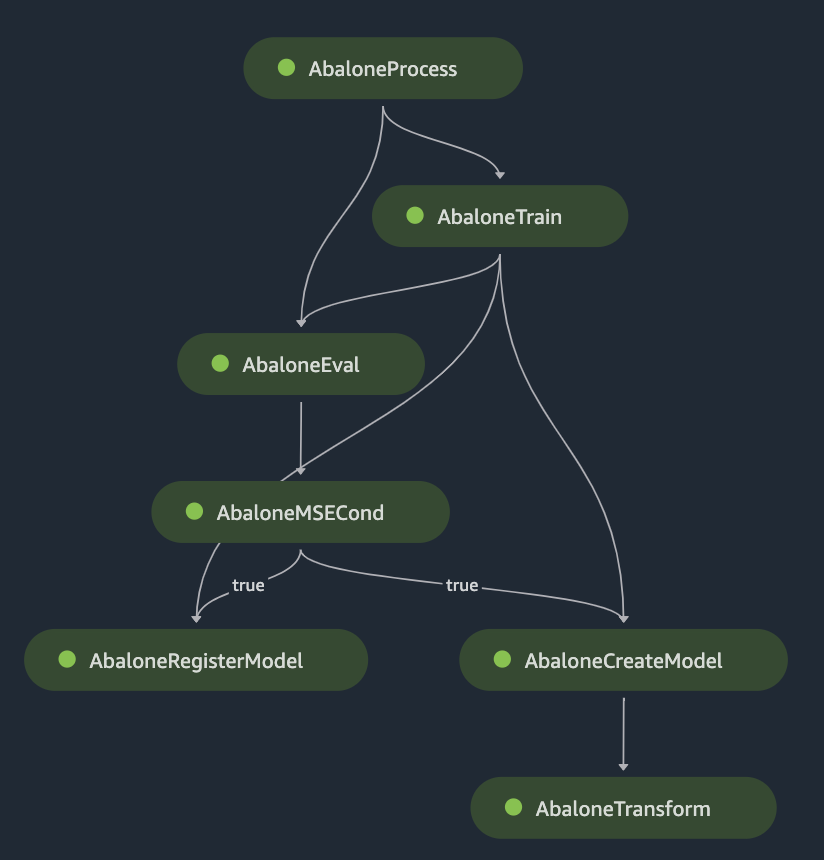
Process engineers use Canvas to prepare data and develop and assess models without coding. Machine-learning engineers then review the model and prediction outputs, approve the model version in SageMaker Model Registry, and configure the production workflow. The workflow uses SageMaker Processing to apply the Canvas preprocessing flow, followed by Batch Transform for inference; Amazon EventBridge starts scheduled runs, and results are stored in Amazon S3.

GS Caltex reports that deploying a model now takes its ML engineers a few hours, compared with about a week previously. The company schedules batch inference every 30 minutes. AWS’s account says this approach reduces the need to keep inference endpoints running continuously and has meaningfully lowered GS Caltex’s inference costs, but it does not provide a specific savings figure.

The workflow also includes checks to keep training and production inputs aligned. For example, if a preprocessing flow expects a target column that is absent from inference data, the reference implementation adds a placeholder before preprocessing and removes it before prediction. The post stresses validating column formats and transformed values, and checking that predictions remain correctly associated with source records.

The system records model approval and pipeline execution details, while engineers can monitor runs through step status and CloudWatch logs. AWS also advises teams to measure full pipeline runtime and costs and to plan for overlapping scheduled runs before enabling automation. GS Caltex says process engineers have begun proposing uses in other processes, while ML engineers spend less time repeating handoff work and more time operating and monitoring pipelines.


Industry Impact

Faster, scheduled model operations

Energy and chemicals; enterprise AI

Overview

GS Caltex’s workflow gives process engineers a way to develop models in SageMaker Canvas while ML engineers retain review and production controls. The reported change reduces model deployment from about a week to a few hours, freeing ML engineers from repeated handoff work. For ML teams and business leaders, scheduled batch predictions every 30 minutes offer a production option that avoids continuously running inference endpoints. The longer-term value will depend on maintaining reliable data alignment, monitoring runs, and verifying costs as teams extend the approach to other processes.

Key Impact Points

Model deployment now takes a few hours rather than about a week, according to GS Caltex.

Scheduled batch inference every 30 minutes reduces the need to keep inference endpoints running continuously; AWS reports lower inference costs but gives no savings figure.

Separating model development from production operations lets process engineers contribute while ML engineers review models and monitor pipelines.

Opportunities

Reusable production workflows for enterprise models

Energy and chemicals; enterprise AI

Organizations using SageMaker Canvas may be able to adapt this pattern to move validated models into scheduled batch inference without maintaining always-on endpoints. The workflow combines preprocessing, model approval, scheduled execution, and stored results, while retaining ML engineer review and monitoring. This creates a practical implementation opportunity for teams seeking faster handoffs between domain experts and ML operations. Any deployment should validate input columns and transformed values, preserve links between predictions and source records, and test pipeline runtime, costs, and overlapping scheduled runs. The article reports lower inference costs at GS Caltex but does not quantify savings or establish results for other organizations.

  • Canvas-to-production pipeline implementation

    Problem: Moving models from domain experts’ development environments into production can involve repeated handoffs and take about a week at GS Caltex.

    Solution: Adapt a reviewed workflow that registers approved models, reuses validated preprocessing, and runs scheduled batch predictions.

    Target Users: Process engineers and ML engineers at organizations using SageMaker Canvas and SageMaker Pipelines.

    Business Value: GS Caltex reports reducing deployment time to a few hours and lowering inference costs, without specifying the amount.

    Revenue Potential: Not quantified in the article; implementation or support services are a possible commercial offering, not a reported outcome.

Reference link

https://aws.amazon.com/blogs/machine-learning/production-mlops-at-gs-caltex-with-amazon-sagemaker-canvas-part-1

Image Source Link

https://docs.aws.amazon.com/images/sagemaker/latest/dg/images/pipeline-full.png

Community Discussion (0)

No discussions yet. Be the first to start the conversation!