
NVIDIA Publishes AI Data Center Designs and Shared Infrastructure Standards
AI Chips & Infrastructure

NVIDIA Publishes AI Data Center Designs and Shared Infrastructure Standards

NVIDIAOct 12, 2026

At the October 12 OCP Global Summit, NVIDIA shared Vera Rubin rack designs and announced infrastructure standards and partner developments for AI factories.

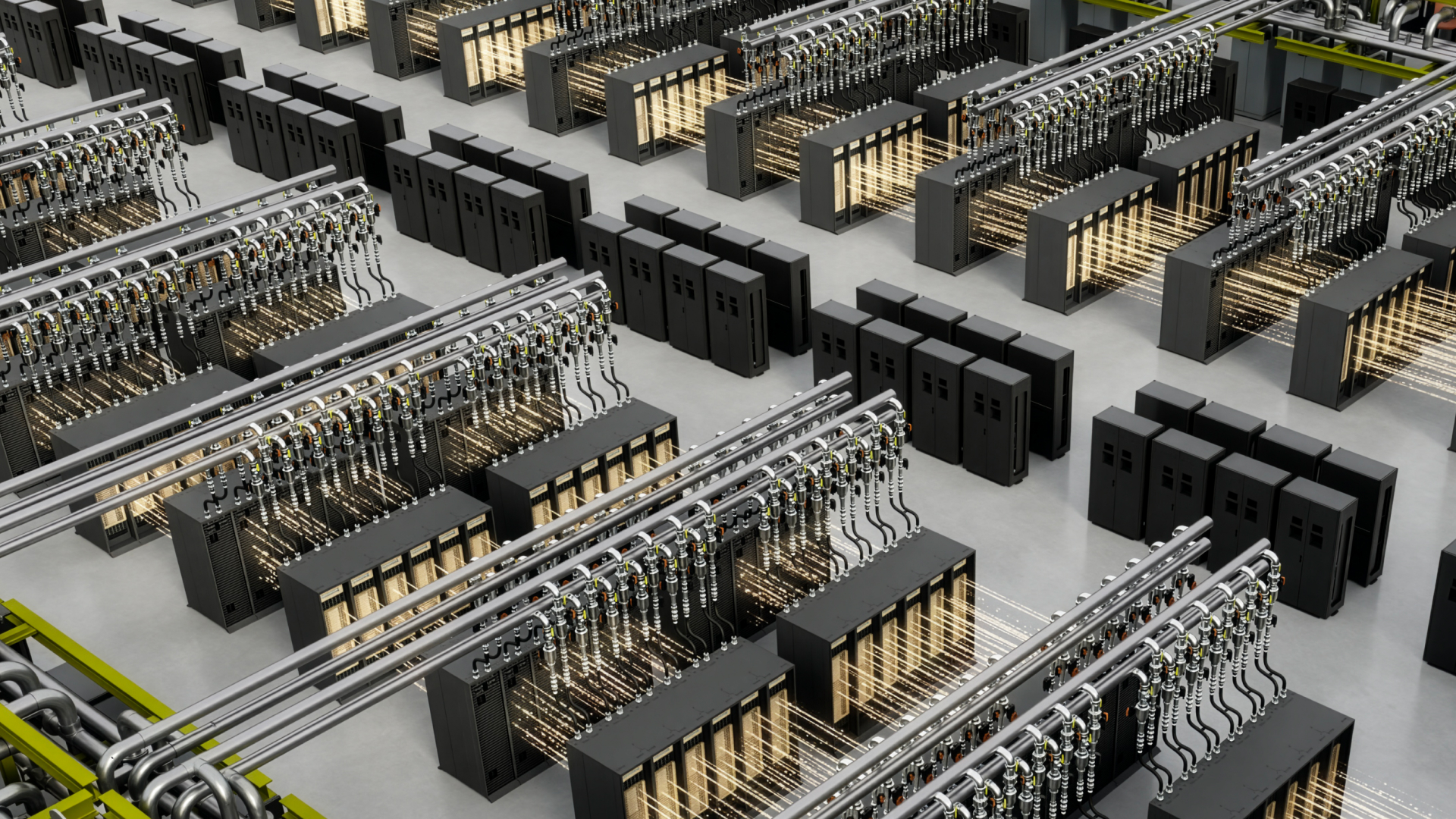
NVIDIA announced new open infrastructure contributions at the Open Compute Project (OCP) Global Summit on October 12, 2026, including rack and compute-tray designs for its Vera Rubin systems. The designs were contributed through NVIDIA’s MGX architecture, giving equipment makers and infrastructure operators a shared reference for building AI data centers.

The updated MGX 1.2 specification supports rack deployments of up to 250 kilowatts. It includes rack-scale liquid cooling, interoperable interconnects, a liquid-cooled 5,000-amp busbar, native 19-inch equipment support and higher-density rack configurations. NVIDIA also described a Vera CPU rack design intended for tasks such as tool calling, orchestration and sandboxed execution, alongside the Vera Rubin NVL72 platform for large-scale training and inference.

The announcements extended beyond rack hardware. NVIDIA joined AMD, Google and Meta in publishing Open Data Center Specification v0.7, a blueprint covering facility design elements including power, cooling and physical layout. Google, Meta, Microsoft and NVIDIA also published an OCP Grid Resilience Specification describing how large AI facilities should respond to utility disruptions, including a return to near-full load in less than two seconds.

Other partner announcements covered networking and operations. Meta plans to use NVIDIA Spectrum-6 switches in its AI infrastructure, while NVIDIA and Cisco announced the USFP optical-transceiver form factor, designed for 400-gigabit-per-second-per-lane networking. NVIDIA also introduced open-source DSX software components for network configuration, cluster checks, rack management and bare-metal provisioning.

Together, the contributions address several layers of AI data-center construction, from facility standards and power resilience to racks, networking and software operations. The specifications and designs are intended to give infrastructure suppliers and operators common foundations as they develop systems for Vera Rubin and other large-scale AI deployments.

Industry Impact

Common blueprints for AI data centers

AI infrastructure, data centers, networking

Overview

NVIDIA’s rack designs and shared facility specifications give equipment makers and operators a common basis for planning high-density AI deployments. The 250-kilowatt MGX specification, liquid cooling, and grid-resilience guidance address practical constraints in power, cooling, and facility operations. In the near term, infrastructure leaders can assess these references against planned Vera Rubin deployments; over time, broader adoption could improve interoperability across suppliers. Software and ML infrastructure teams may also benefit from the accompanying rack-management and provisioning components.

Key Impact Points

MGX 1.2 supports rack deployments up to 250 kilowatts and specifies liquid cooling and interoperable interconnects.

The grid-resilience specification calls for facilities to return to near-full load in less than two seconds after utility disruptions.

NVIDIA’s open DSX components extend the announcement into network configuration, cluster checks, rack management, and bare-metal provisioning.

Opportunities

AI data center implementation and operations

Data center engineering, AI infrastructure, networking

The published designs and specifications create a practical opening for engineering and integration services that help operators translate common references into facility plans and deployed systems. Suppliers can assess compatibility with MGX rack requirements, liquid cooling, and interconnects, while operators can evaluate power resilience and rack-management workflows before committing to deployments. NVIDIA’s open DSX components may also support services or tools for provisioning and cluster checks. These are potential offerings grounded in the announced standards; the article does not establish customer demand, pricing, or adoption levels.

  • AI data center design and integration services

    Problem: Operators must coordinate power, cooling, racks, and networking to deploy high-density AI systems.

    Solution: Provide engineering and integration services that map facility plans and equipment to the published MGX and data center specifications.

    Target Users: AI data center operators and equipment makers.

    Business Value: A shared reference can help teams plan interoperable infrastructure and assess deployment requirements.

    Revenue Potential: Potential project-based engineering and integration revenue; the article provides no market-size or pricing data.

Reference link

https://blogs.nvidia.com/blog/ocp-global-summit-vera-rubin-scale-ai-factories

Image Source Link

https://blogs.nvidia.com/wp-content/uploads/2026/10/gpu-architecture-rolling-blog-kv-ocp-blog-1920x1080-5820310.jpg

Community Discussion (0)

Loading discussions...