
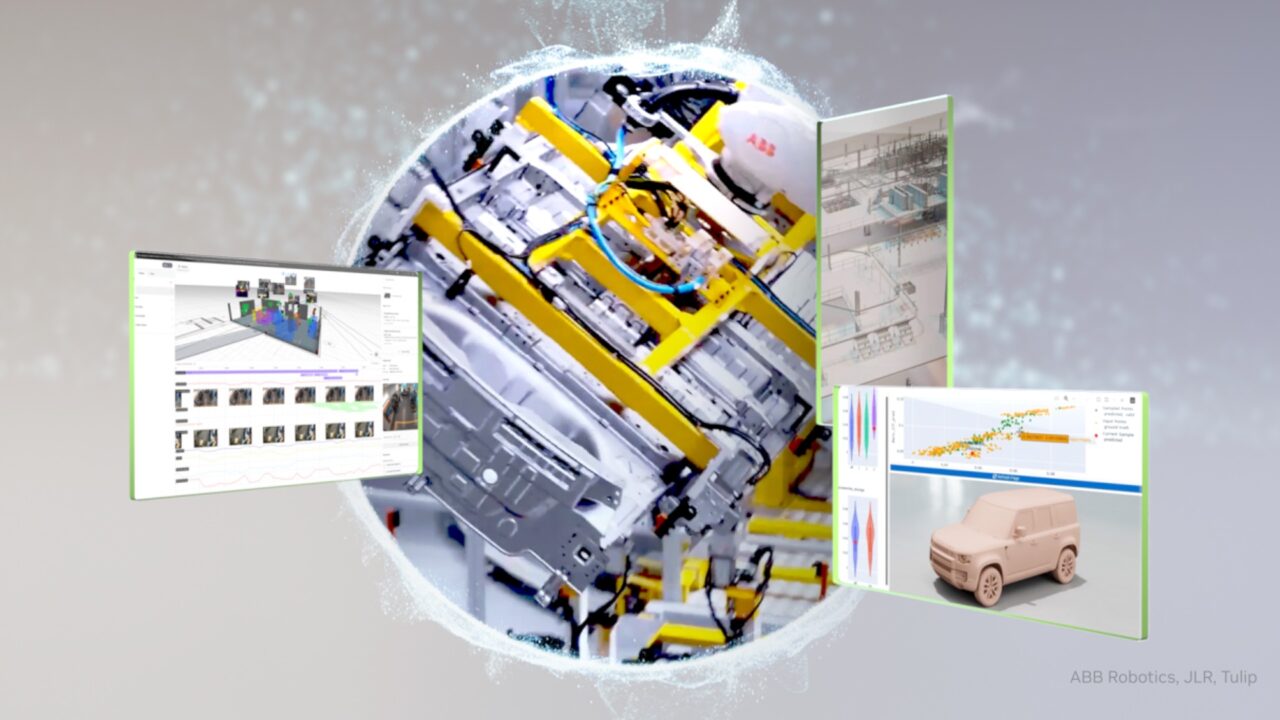
NVIDIA Shows AI Agents Creating and Testing Omniverse Simulations
AI Agents & Automation

NVIDIA Shows AI Agents Creating and Testing Omniverse Simulations

NVIDIANov 7, 2026

NVIDIA described developer projects using AI agents and Omniverse libraries to create simulation scenes, test robots and explore equipment scenarios.

NVIDIA outlined a series of developer projects on November 5, 2026, using AI agents with Omniverse libraries to build and examine simulation applications. The examples span 3D asset creation, warehouse planning, robotic disassembly, industrial equipment and simulation performance. They are demonstrations and prototypes, not a single newly announced product.

In one project, NVIDIA’s BondLab technical artist Nick Scarcella used agents, including GPT-6 Astra, to help recreate an OP-1 synthesizer from product images and manuals. The model was exported into OpenUSD, tested in Houdini and Blender, then refined for rendering. In a separate robotics example, NVIDIA’s Jens Jebens directed Astra to model a car suspension and configure it in Isaac Sim. Simulation feedback informed a wrench design, and the team reported removing a suspension component successfully in simulation.

Other examples focus on planning and testing before physical changes. NVIDIA’s David Wehr used panoramic photographs and point-cloud measurements to develop an editable building model for evaluating warehouse layouts. Another prototype lets users adjust conditions for a simulated gas turbine and generator, then compare power, efficiency, fuel use and equipment response across six procedures, including a stuck fuel valve and an exhaust-sensor error.

The post also reports a warehouse stress test: with 80 conveyors, 40 robot arms and 800 boxes, the simulation sustained 30 frames per second at full HD during a two-minute run, completing 640 box placements. A further doubling of the scene reduced performance, and the test identified the physics and robot-control pipeline as the bottleneck.

Across the projects, agents take instructions and help create or modify scenes, while developers review the results and guide changes. NVIDIA’s examples show how simulation can support design exploration and pre-deployment testing; they do not establish that the prototypes are ready for operational use.

Industry Impact

Simulation workflows gain agent assistance

Warehousing, robotics, industrial equipment and 3D design

Overview

NVIDIA’s prototypes show agents helping developers create and modify simulation scenes, then use simulated results to guide design and testing. For software developers and product managers in robotics, warehousing and industrial equipment, this could shorten exploration of layouts, robot tasks and equipment scenarios before physical changes. The warehouse stress test also illustrates how simulation can expose performance bottlenecks under load. However, these are demonstrations, not evidence of operational readiness; teams would need to validate accuracy, reliability and integration before relying on such workflows.

Key Impact Points

Agents helped build scenes and assets from instructions and source materials, with developers reviewing and guiding changes.

Simulation enabled pre-deployment exploration of warehouse layouts, robotic disassembly and industrial equipment scenarios.

The warehouse test surfaced a physics and robot-control bottleneck as scene scale increased.

Opportunities

Potential for agent-assisted simulation workflows

Robotics, warehousing, industrial equipment and 3D design

The examples point to a potential workflow opportunity: helping engineering and operations teams turn images, measurements or instructions into editable simulation scenes, then test layouts, robot tasks and equipment conditions before making physical changes. A commercial offering could combine scene-building assistance, simulation tools and workflows for reviewing results, but the article describes prototypes rather than a ready-to-deploy service. Organizations considering this direction should first identify a specific planning or testing task, compare agent-assisted setup with current processes, and verify that simulations accurately represent real equipment and operating conditions. The reported performance bottleneck also makes scalability a key evaluation criterion.

  • Agent-assisted simulation setup and testing

    Problem: Creating and adjusting simulation scenes for layouts, robot tasks or equipment scenarios can require developer effort.

    Solution: Apply agent assistance to scene creation and modification, with developers reviewing results and using simulation feedback to guide tests.

    Target Users: Robotics, warehouse planning and industrial equipment teams.

    Business Value: Potentially make it easier to explore designs and test scenarios before physical changes; the article does not quantify savings or establish operational readiness.

    Revenue Potential: Not demonstrated in the article; a commercial workflow or service is a possible direction if prototypes prove useful and reliable.

Reference link

https://blogs.nvidia.com/blog/developers-simulation-frontier-ai-agents

Image Source Link

https://blogs.nvidia.com/wp-content/uploads/2026/04/april-ito-1920x1080-1-1280x720.jpg

Community Discussion (0)

No discussions yet. Be the first to start the conversation!