
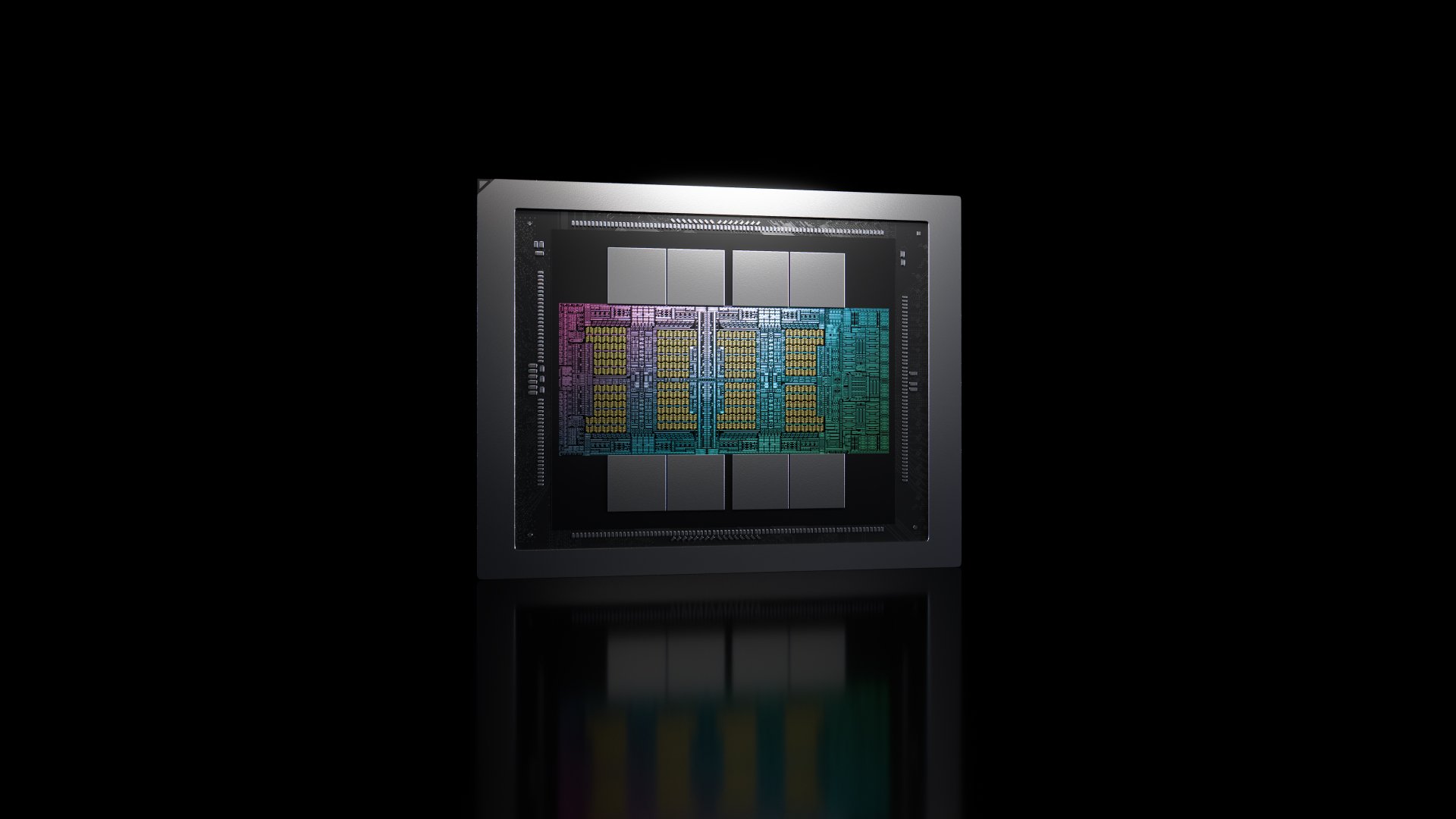
NVIDIA announced Rubin HPC, a GPU with more than 50,000 CUDA cores designed to accelerate scientific computing and simulation workloads.
NVIDIA announced Rubin HPC on November 16, 2026, at SC26, introducing a new GPU for its Vera Rubin platform. The company says the processor is designed for simulation and data-processing workloads in science, engineering and analytics, including calculations used to evaluate candidate materials, molecules and designs.
Rubin HPC will have more than 50,000 CUDA cores on a single GPU. NVIDIA also cited sparse-data acceleration and seventh-generation NVLink connectivity, describing these features as part of a design intended to keep computing resources supplied with data as workloads run. The company says this balance is aimed at recurring operations in simulations, including sparse-matrix calculations, stencil computations, sorting and reductions.
The workloads NVIDIA highlights include climate modeling, engineering simulations, genomic analysis and financial risk. They often involve repeatedly retrieving scattered values from large datasets, performing calculations and repeating the process at scale. Faster computation could shorten the time needed to test ideas in simulation and refine them before researchers or engineers move to experiments or physical prototypes.
NVIDIA also pointed to its CUDA-X libraries, which provide optimized implementations of algorithms used in simulation and analytics. The company says these libraries can be used with Rubin HPC in agent-driven workflows, where software agents initiate simulations and use results to inform subsequent steps. NVIDIA vice president Ian Buck said faster simulations could help teams explore more possibilities; that is the company’s stated expectation, not a reported benchmark result.
Rubin HPC is expected to be available in 2028. NVIDIA did not provide pricing or detailed performance comparisons in its announcement.