OpenAI Opens Astra for Law Access to Enterprise Customers After Benchmark Gains
AI Industry Applications

OpenAI Opens Astra for Law Access to Enterprise Customers After Benchmark Gains

OpenAINov 18, 2026

OpenAI says its updated Astra for Law led two legal evaluations and is now available for access requests from ChatGPT Enterprise customers.

OpenAI announced an updated Astra for Law on November 17, 2026, and said ChatGPT Enterprise customers can request access through its Trusted Access Program, including for API use. Astra for Law is a configuration of GPT-6.2 Astra paired with a legal search index and instructions for researching questions, weighing legal authorities and drafting answers.

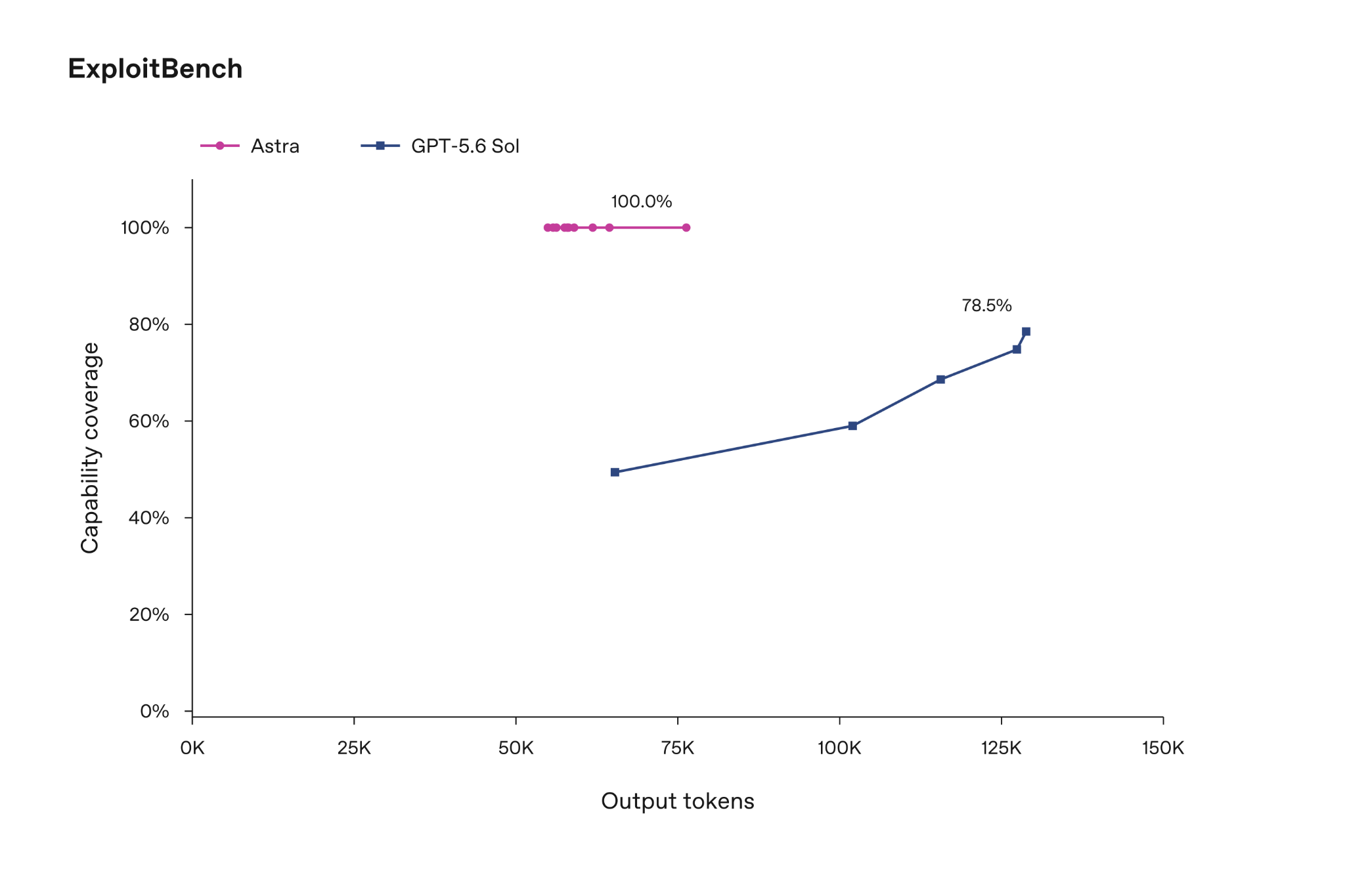
The company reported that the system earned full credit on 20.8% of assignments in Artificial Analysis’s Harvey LAB-AA evaluation. The test includes 120 assignments across 24 areas of law, with credit requiring that an answer satisfy every assignment requirement without making a material unsupported claim. GPT-6.2 Astra scored 15.0%, while the highest-scoring non-OpenAI configuration, Muse Wonder Full, scored 13.1%. OpenAI said Astra for Law averaged about 64,000 output tokens per assignment, compared with 139,000 for Muse Wonder Full.

On Vals AI’s Legal Research Bench, which tests questions on U.S. federal and state law, OpenAI reported that Astra for Law received full credit on 112 of 208 questions in the November 16 evaluation, or 53.8%. The company said its September result was about 46%. It also reported 90.9% of available points when partial credit was included. These figures are reported by OpenAI from third-party evaluations; they do not establish how the system will perform on every legal task or in a lawyer’s practice.

OpenAI said the legal search index has grown 34% since September, adding more than 80 million URLs. The updated index contains over 310 million URLs and, according to the company, covers more than 99.9% of published U.S. precedential case law. OpenAI also said Astra for Law averaged 0.03 material hallucinations per assignment in the LAB-AA comparison, versus 0.59 for Claude Opus 5.5.

The company described early use cases including testing arguments against counterarguments, mapping rules relevant to a proposed business activity and turning internal policies into case-handling workflows. Access is by request rather than an automatic Enterprise rollout; customers with access can select the `gpt-6.2-astra-law` model in ChatGPT, while API access can also be requested.

Industry Impact

Legal AI Moves Into Enterprise Testing

Legal services, enterprise software, and corporate legal departments

Overview

OpenAI’s benchmark results and request-based Enterprise access give legal teams a new system to evaluate for research, argument testing, and policy workflows. The results offer comparative signals, but they come from third-party evaluations and do not establish performance across all legal tasks or in practice. In the short term, legal and technology leaders can test the system against their own requirements. Longer term, the larger legal search index and API access could support integration into internal workflows, subject to customer validation.

Key Impact Points

Enterprise customers can request access in ChatGPT or through the API, rather than receiving an automatic rollout.

OpenAI reports higher full-credit scores than the named comparison configurations on two legal evaluations, while emphasizing that test results do not guarantee real-world performance.

The legal index now contains more than 310 million URLs, which OpenAI says cover over 99.9% of published U.S. precedential case law.

Opportunities

Evaluate Legal Research Workflows

Law firms, corporate legal teams, and enterprise AI integrators

The clearest opportunity is to test Astra for Law on bounded legal workflows, such as mapping relevant rules, challenging arguments with counterarguments, or converting internal policies into case-handling workflows. Legal teams can compare outputs with established research and review processes, checking citations, completeness, and unsupported claims before considering broader use. Customers with access can select the model in ChatGPT, and API access can be requested for workflow integration. The article does not specify pricing or guarantee commercial returns, so revenue potential remains uncertain; any value would depend on validated time savings, quality, and fit with existing practice.

  • Legal Research and Workflow Pilot

    Problem: Legal teams need to research authorities and structure repeatable workflows, while ensuring outputs meet matter-specific accuracy and review requirements.

    Solution: Request access to Astra for Law and assess it on bounded research or policy-workflow tasks, with human review and comparison against existing processes.

    Target Users: Law firms and corporate legal departments with ChatGPT Enterprise access, plus teams exploring API integration.

    Business Value: A pilot can establish whether the system improves research or workflow efficiency without assuming benchmark results transfer directly to practice.

    Revenue Potential: OpenAI offers Enterprise and API access by request; the article provides no pricing or quantified savings.

Reference link

https://openai.com/index/astra-law-6-2

Image Source Link

https://www.reuters.com/resizer/v2/SPCDT4TJFZPAPDDTYBSQOVRZAU.jpg?auth=52fdab7b6c6c6c342193625eb30648c21b44af0e7b2dfc6ee3339cb6b32311c9&height=1500&width=1200&quality=80&smart=true

Community Discussion (0)

No discussions yet. Be the first to start the conversation!