
Orca Security Says Bedrock AI Cuts Sonar Query Costs 90% in Production
AI Cybersecurity

Orca Security Says Bedrock AI Cuts Sonar Query Costs 90% in Production

AWS Machine LearningOct 13, 2026

Orca Security’s Discovery AI translates plain-language requests into validated Sonar filters, and AWS reports lower token use, cost and latency.

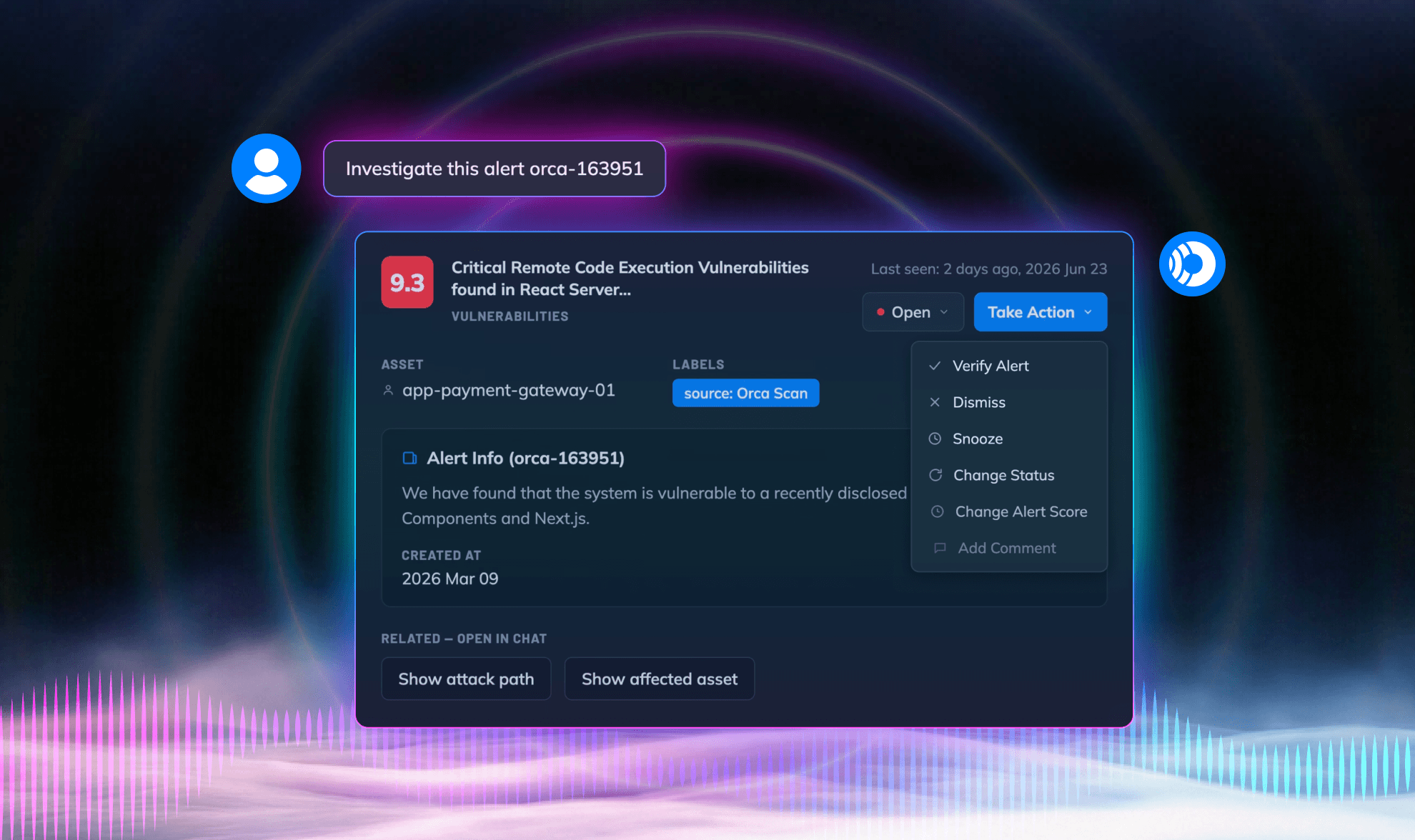
Orca Security has deployed Discovery AI, a natural-language agent that turns security questions into structured filters for its Sonar query system. In an AWS Machine Learning post published October 13, 2026, the companies said the production system handles thousands of queries daily and has been in use since March 2026.

AWS reports that, compared with Orca’s initial prototype, the deployed approach reduced input tokens by 93%, from about 2 million to 140,000 per comparable workload. Query costs fell 90%, while end-to-end response time declined 75%, from roughly 60 seconds to 15 seconds. The post says accuracy on complex, multi-model questions also improved, though it does not give a specific accuracy percentage.

The system addresses a schema challenge: Sonar covers more than 900 cloud infrastructure and application models, and its queries rely on precise model names, relationships and 18 operators. Rather than include the full schema in every prompt, Discovery AI retrieves relevant examples, selects only the models needed for a request, and generates a filter that is checked for syntax and meaning, including against Orca’s Sonar API.

Its nine-stage pipeline combines deterministic matching for recognizable identifiers with model-based screening, retrieval and generation. Amazon Titan embeddings retrieve 20 candidate examples, which Cohere Rerank 3.5 narrows to five. Anthropic Claude Haiku 4.5 powers model selection and filter generation; Amazon Nova 2 Lite handles guardrail screening and validation. AWS says the architecture also uses Bedrock governance features including IAM, VPC endpoints and CloudTrail.

Orca’s continuous evaluation harness checks changes to prompts, models and retrieval settings before release. A human review workflow lets domain experts correct low-confidence results and add examples to the retrieval bank, so later queries can use the corrections without a separate deployment. The reported improvements are comparisons with Orca’s own initial baseline, rather than a general benchmark of security-query systems.

Industry Impact

Lower-cost security queries

Cybersecurity, cloud infrastructure, enterprise software

Overview

Orca Security’s production Discovery AI converts plain-language security requests into validated Sonar filters, handling thousands of queries daily since March 2026. Compared with its initial prototype, AWS reports 90% lower query costs, 93% fewer input tokens and 75% shorter response times. In the short term, these results show security teams how schema retrieval and validation can make natural-language querying more practical at scale. Longer term, teams evaluating similar workflows should treat the figures as a company-specific baseline comparison, not a general benchmark.

Key Impact Points

The production system handles thousands of security queries daily across a schema covering more than 900 models.

Retrieving relevant schema examples instead of including the full schema in every prompt reduced input tokens by 93% versus the initial prototype.

Syntax and meaning checks, continuous evaluation and expert corrections help manage the risks of generating structured security queries.

Opportunities

Natural-language security query workflows

Cybersecurity platforms, cloud security, enterprise software

Security software providers can explore natural-language interfaces that translate user questions into validated filters over complex product schemas. Orca’s approach points to a practical design pattern: retrieve relevant examples, select only the needed models, validate generated filters, and use expert corrections to improve later results. For buyers, this may reduce query friction; for vendors, it offers a way to make existing security data more accessible without placing the full schema in every prompt. Any adoption should be tested against the organization’s own query mix, accuracy needs, latency and costs. The article reports no direct revenue figures or standalone commercialization plan.

  • Validated natural-language querying for security data

    Problem: Security queries can require precise model names, relationships and operators across large schemas.

    Solution: Use an AI workflow to retrieve relevant examples, generate structured filters and validate them against the query system.

    Target Users: Cybersecurity professionals and users of cloud security platforms.

    Business Value: The approach may make complex queries easier to submit while reducing token use, cost and latency, as reported against Orca’s initial prototype.

    Revenue Potential: No revenue or pricing impact is reported; vendors could assess whether this capability supports product differentiation or customer retention.

Reference link

https://aws.amazon.com/blogs/machine-learning/natural-language-security-queries-at-orca-security-using-amazon-bedrock

Image Source Link

https://orca.security/wp-content/uploads/2026/06/blog-orca-mcp-text-stops-scaling-1.png

Community Discussion (0)

No discussions yet. Be the first to start the conversation!