
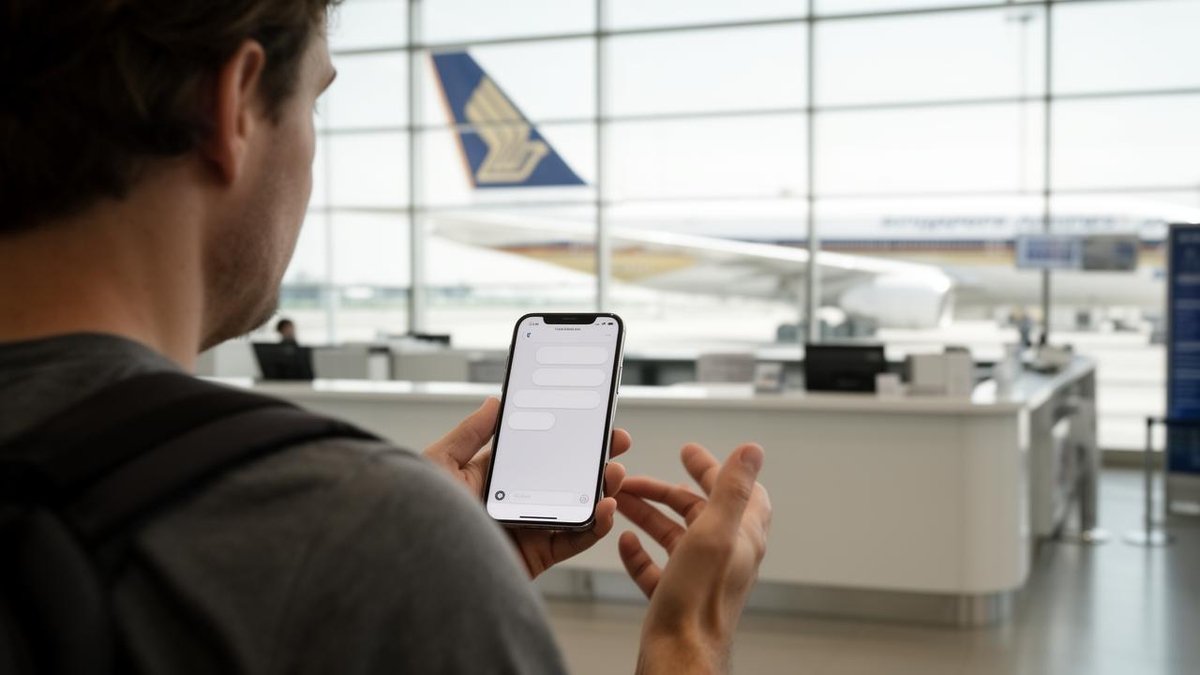
Singapore Airlines Says OpenAI-Powered Kris Doubled Customer Satisfaction
NO IMAGE
AI Industry Applications

Singapore Airlines Says OpenAI-Powered Kris Doubled Customer Satisfaction

OpenAINov 11, 2026

Singapore Airlines says its OpenAI-powered Kris chatbot doubled customer satisfaction, while AI-assisted service tools cut average handling time by about 10%.

Singapore Airlines said on November 10, 2026, that it is using OpenAI models across customer service, travel discovery, employee tools and parts of software development. The airline reported that customer satisfaction with Kris doubled after it replaced the chatbot’s scripted dialogue flows with a conversational system powered by the OpenAI API.

Kris can interpret requests in natural language, draw answers from a knowledge base and handle conversations spanning multiple topics. It supports general questions, special requests, flight disruption information and selected transactions, and can pass relevant context to a human representative. The airline says it is working to add more self-service transactions, including booking changes and baggage requests.

For customer service staff, AI-assisted tools include call summarization. Singapore Airlines reported an approximately 10% reduction in representatives’ average handling time. Its Flight Recommender, which uses natural-language requests alongside fare and availability data to suggest trips, has seen monthly users grow nearly threefold over the past year. The airline has added controls for input and output validation, personal information handling and access to relevant data.

The deployment also extends behind the scenes. Singapore Airlines reported productivity gains of up to 20% in selected software-development activities, including requirements refinement, testing and architecture review. Its internal Jarvis platform, which provides employees with access to OpenAI models for tasks such as document summarization and custom workflows, is used monthly by more than 60% of employees.

The figures are results reported by Singapore Airlines. The company says it plans to continue expanding Kris’s transactional capabilities and make travel discovery more conversational, while extending Jarvis use across the business.

Industry Impact

AI improves airline service efficiency

Aviation, customer service, software development

Overview

Singapore Airlines reports that replacing Kris’s scripted flows with an OpenAI-powered conversational system doubled customer satisfaction, while call-summarization tools reduced representatives’ average handling time by about 10%. The results, which the airline reports, show how AI can affect both customer-facing service and internal work. For product managers and business leaders, the case highlights the value of measuring service outcomes alongside efficiency. Developers may also note reported productivity gains of up to 20% in selected software-development activities.

Key Impact Points

Kris handles varied customer questions and can pass context to human representatives, with more self-service transactions planned.

Call summarization reduced average handling time by about 10%, according to Singapore Airlines.

The airline reports up to 20% productivity gains in selected software-development activities and monthly Jarvis use by more than 60% of employees.

Opportunities

Expand conversational airline self-service

Aviation, customer support, travel discovery

Airlines can explore conversational systems that answer travel questions, provide disruption information, manage selected requests, and route relevant context to human representatives. Singapore Airlines’ plans to add booking changes and baggage requests to Kris point to a practical expansion path: begin with supported inquiries, then add transactions where validation and access controls are in place. The airline’s Flight Recommender also illustrates an opportunity to pair natural-language trip requests with fare and availability data. Operators should assess customer satisfaction, handling time, adoption, and transaction completion. The article reports operational benefits, but gives no direct revenue figures or proof of commercial returns beyond the airline’s own results.

  • Conversational self-service for airline customers

    Problem: Scripted chatbot flows can limit how naturally customers ask questions and complete service requests.

    Solution: Use a conversational system grounded in a knowledge base, with context handoff to human representatives and carefully validated self-service transactions.

    Target Users: Airline customer-service teams and travelers seeking answers, disruption information, or selected service transactions.

    Business Value: Singapore Airlines reports doubled customer satisfaction after moving Kris from scripted flows to a conversational system; additional transactions are planned.

    Revenue Potential: No direct revenue impact is reported. Potential value is in service efficiency and customer experience, subject to validation in each deployment.

Reference link

https://openai.com/index/singapore-airlines-travel-work

Image Source Link

https://img.biggo.com/s3XrLg1dbaSIiLnDjp8wXT71kAipLw-P9ND3MpfheYo/fit/1200/0/sm/0/aHR0cHM6Ly9pbWcuYmdvLm9uZS9uZXdzLWltYWdlL2FpX2dlbmVyYXRlZC8yMDI2LTExLzExZWUwNDc4LTUxYjUtNDg1MS05ZTM0LTEyMGFkMjQ2OTVjNF8xNzk0MzgyNjg2X2RlZmF1bHQuanBn.jpg

Community Discussion (0)

No discussions yet. Be the first to start the conversation!