
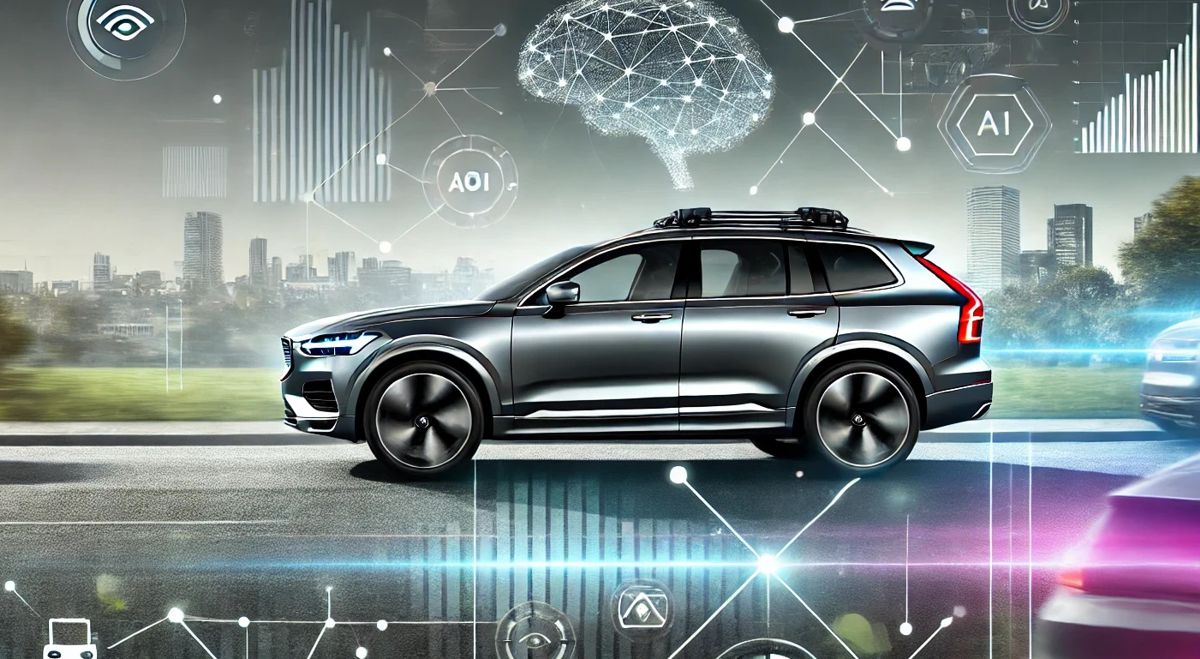
Volvo will combine its safety systems with NVIDIA’s Hyperion, Halos OS, and Alpamayo technologies for automated driving in a next-generation vehicle.
Volvo Cars announced on October 15 that it is expanding its partnership with NVIDIA to develop automated-driving technology for future vehicles. The plan combines Volvo’s vehicle safety systems and engineering with NVIDIA’s Hyperion sensor and computing architecture, Halos OS, and Alpamayo driving software stack.
Volvo says the system is intended to navigate complex environments, including highways, busy urban streets, and parking scenarios. The companies describe the expanded work as building on a collaboration that began in 2017. Volvo says the technology will debut in a next-generation car as part of its product plans, but has not identified the model or disclosed the financial terms of the partnership.
NVIDIA’s Alpamayo is a family of AI models, datasets, and development tools for autonomous-driving systems. TechCrunch reported that the stack is designed to work alongside conventional software for perception and vehicle decisions, rather than replacing those systems outright. That combination reflects an approach in which learned models contribute to driving tasks while established software and vehicle safety engineering remain part of the system.
The announcement broadens the scope of Volvo’s work with NVIDIA beyond the computing hardware already used in its battery-electric vehicles. Volvo has said it intends to apply the technology across future vehicles, including electric, plug-in hybrid, and gasoline models. The company has also described a gradual introduction of more automated driving capabilities; the announcement does not establish a launch date or specify the level of automation that the first vehicle will support.
For automakers, the partnership illustrates how AI models, sensor systems, onboard computing, and safety engineering are being developed as an integrated vehicle stack. But the announcement remains a development plan rather than evidence of a production-ready system. Volvo has not named the first vehicle or provided a firm schedule, and real-world performance and safety will need to be assessed once the technology reaches vehicles.