
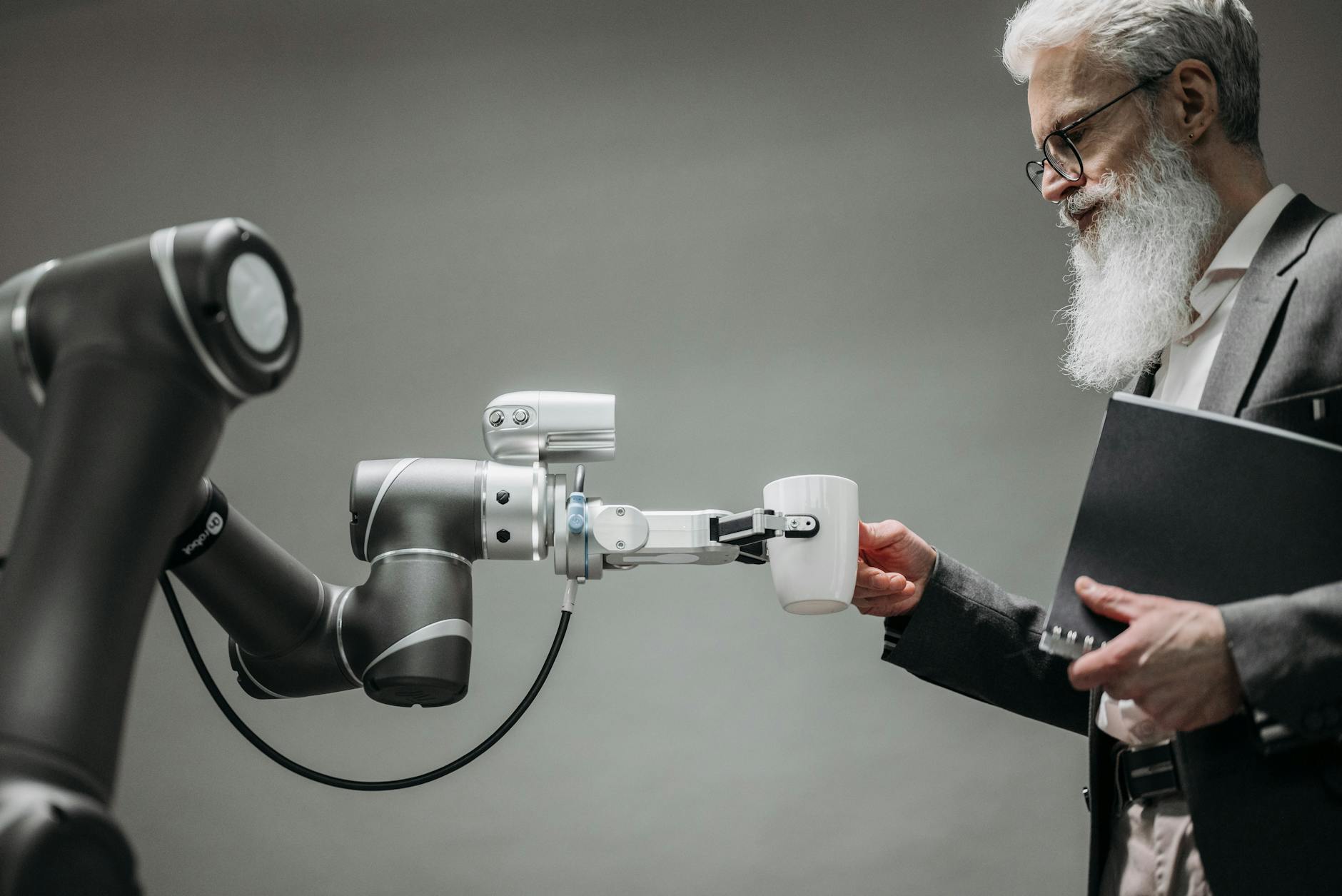
Physical AI and Enterprise Robotics Move Toward Deployment
Industry coverage points to growing interest in AI-enabled robots for real enterprise tasks, alongside persistent integration and scaling challenges.
Overview
Recent industry coverage describes physical AI moving beyond traditional robotics toward systems intended to perform enterprise tasks. The same coverage emphasizes that organizations still face significant challenges integrating and scaling robotic systems. This makes physical AI a promising but execution-heavy trend: models and perception systems must work with sensors, actuators, safety procedures, and existing operational technology in real environments. The available reporting supports the direction of interest, but does not establish broad deployment or quantified productivity gains.
Why This Topic is Trending
The topic is gaining visibility as industry reporting describes physical AI moving into practical enterprise contexts. At the same time, the acknowledged integration and scaling hurdles make deployment capability—not demonstrations alone—the key measure of momentum.
Key Insights
Physical AI connects AI capabilities to robots and other systems that act in the physical world.
Enterprise integration and scaling remain major barriers, according to recent industry coverage.
Successful deployment requires attention to safety, reliability, and compatibility with existing operations.
Practical Use Cases
Industry Impact
- •Could extend AI automation from digital workflows into physical operations.
- •May improve consistency in repetitive or hazardous tasks if systems meet safety requirements.
- •Requires investment in integration, maintenance, workforce training, and operational validation.