AWS outlined three tested OAuth configurations for Amazon Bedrock AgentCore agents accessing Snowflake Cortex through its managed MCP server.
On November 17, 2026, AWS published a technical guide to authenticating Amazon Bedrock AgentCore agents that use Snowflake Cortex AI through Snowflake’s managed Model Context Protocol (MCP) server. The guide compares three OAuth configurations tested end to end, with the choice depending on whether access should be tied to an individual or a shared service identity.
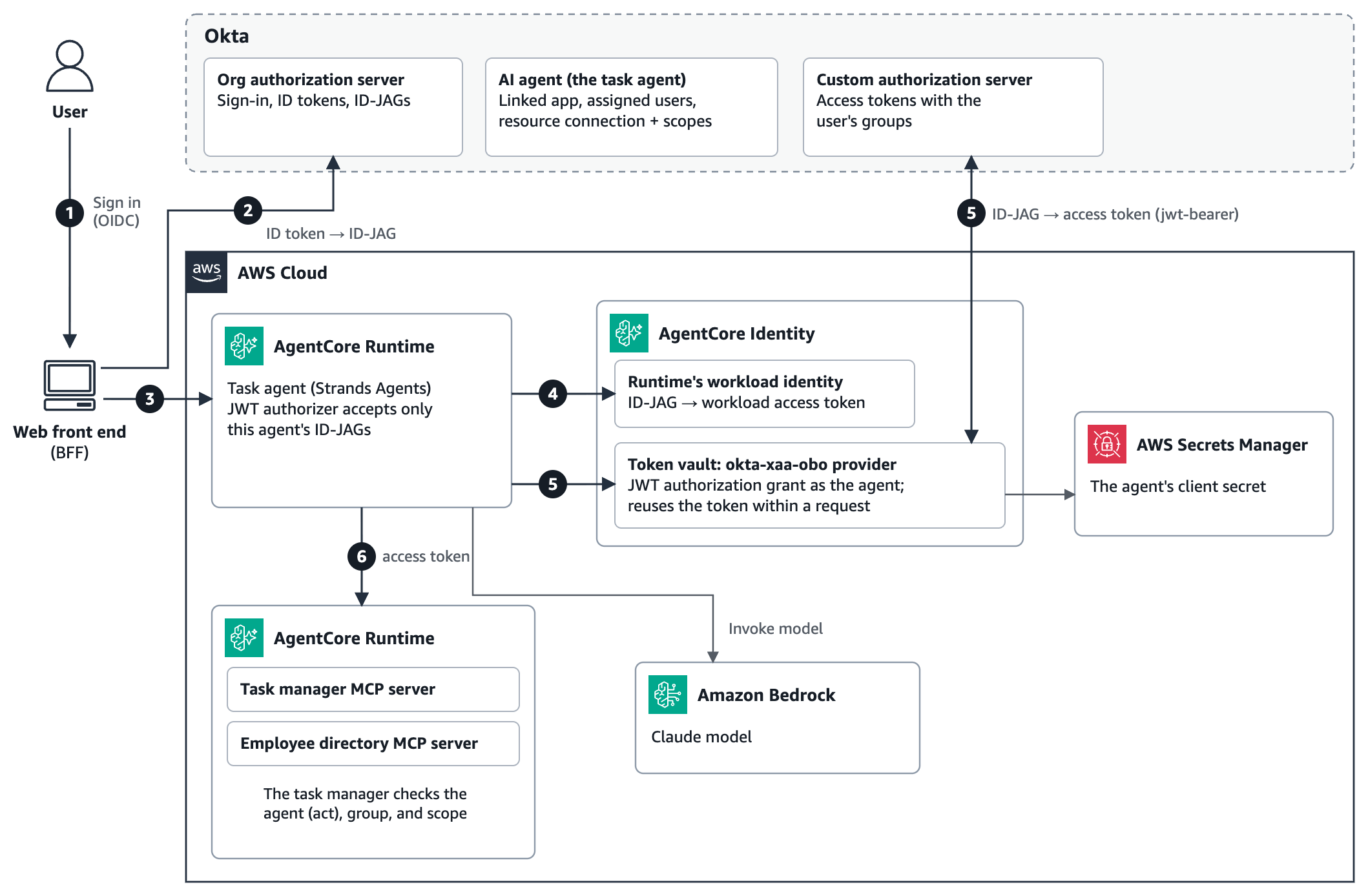
In the first option, Snowflake provides its own authorization service: users sign in directly to Snowflake and authorize access under a specified role. A second approach uses three-legged OAuth with a corporate identity provider, such as Okta or Microsoft Entra ID, so employees authenticate through company single sign-on and Snowflake maps the identity to a user and role. The third uses two-legged OAuth and a shared service account, allowing machine-to-machine access without an interactive user consent step.
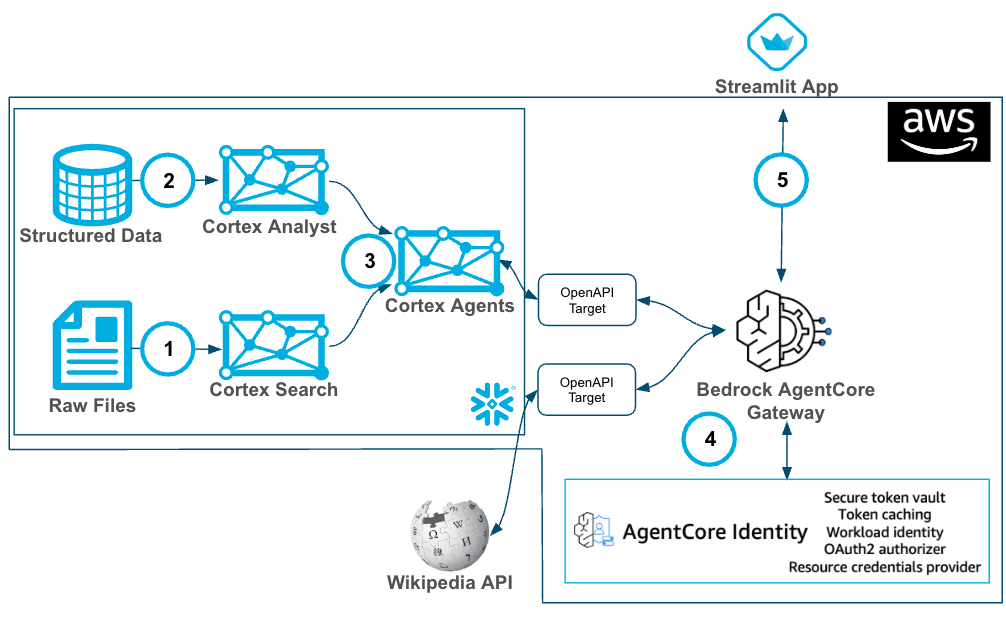
The architecture places Amazon Bedrock AgentCore Gateway between the agent and Snowflake’s MCP endpoint. AgentCore Identity brokers credentials, associates tokens with users, and handles token storage, caching, and refresh. The Snowflake server exposes Cortex Search and Cortex Analyst as tools the agent can discover and call. AWS also describes an on-behalf-of token-exchange grant for unattended workloads, although it is not one of the three configurations covered in the end-to-end tests.
The distinction matters for audit and access control. With the two user-based approaches, Snowflake queries can run as the individual user under that user’s assigned role; the shared-service pattern attributes calls to a service user instead. AWS notes that the external-provider patterns were tested with Okta and Microsoft Entra ID and may extend to other OAuth-protected MCP servers, but implementers should validate token claims, scopes, and audience settings for their provider. The Snowflake-native option relies on Snowflake’s own OAuth server.