NVIDIA Integrates Quantum Processors Into Slurm for Supercomputing Centers
AI Chips & Infrastructure

NVIDIA Integrates Quantum Processors Into Slurm for Supercomputing Centers

NVIDIANov 17, 2026

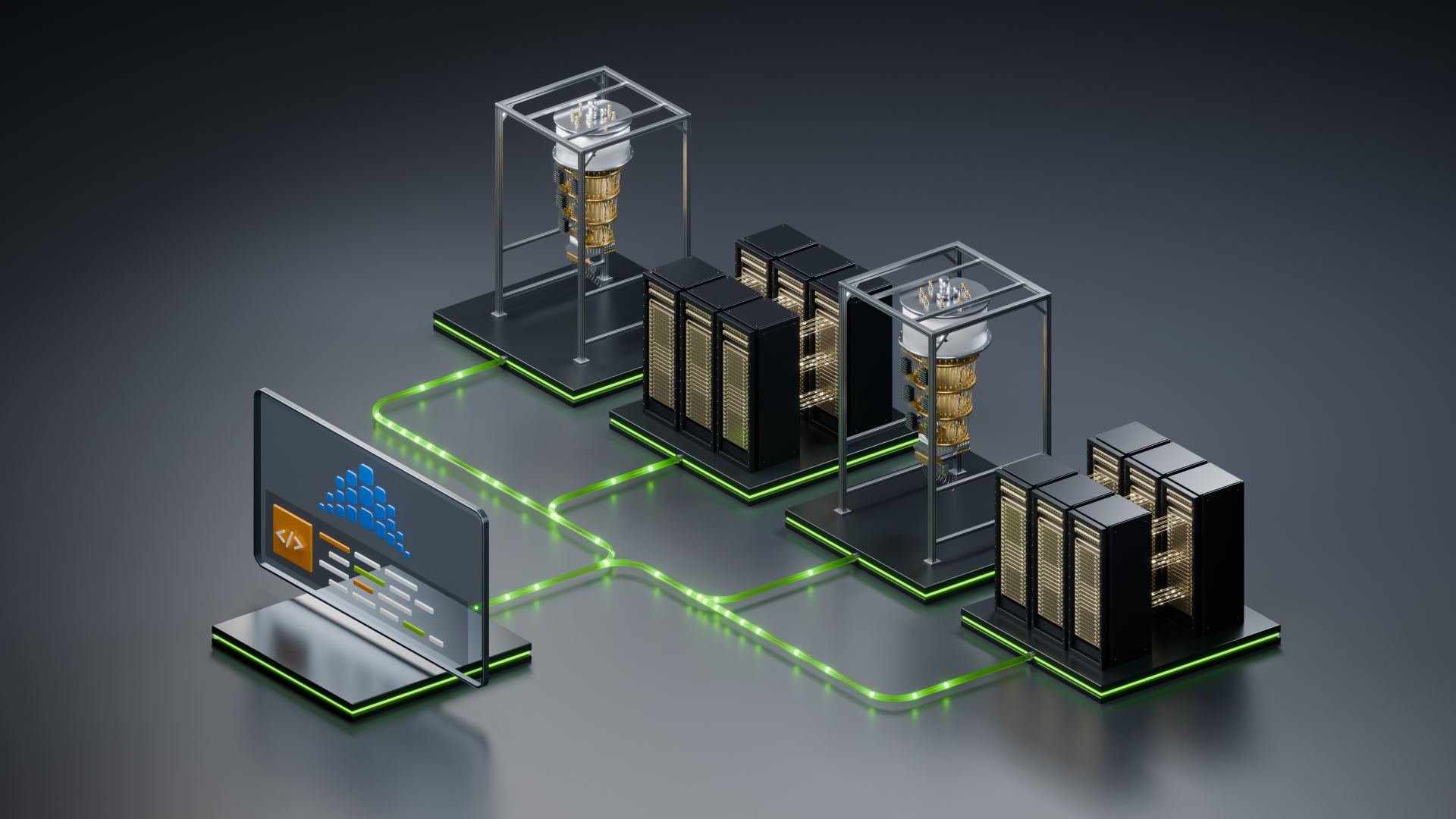
NVIDIA’s expanded Slurm support lets supercomputing centers manage quantum processors alongside existing computing resources using established interfaces.

NVIDIA announced expanded quantum processor support for Slurm on November 16, 2026, aiming to help supercomputing centers integrate quantum hardware into their existing resource-management workflows. The company reported that nearly 30 centers worldwide are in the process of deploying more than 50 quantum processors, with deployments at supercomputing centers having grown nearly sevenfold over five years.

The new Slurm release builds on earlier work with IBM, Pasqal and the broader quantum-computing community. It lets quantum processor builders provide an interface for their hardware through a configuration file, with support for the QRMI and QDMI interfaces. NVIDIA says this can reduce the need for separate, custom integrations for each combination of quantum processor and supercomputing center.

The expansion is being adopted by Alice & Bob, IBM, IQM, Pasqal, Quantinuum and MQSC. The intended users include research centers and scientists who need to coordinate access to both conventional high-performance computing resources and quantum processors. NVIDIA says researchers will be able to run quantum-classical applications built with platforms such as CUDA-Q under Slurm’s scheduling.

NVIDIA also described related updates to its quantum-computing platform. In quantum error-correction work, a new TCBP-JOBS decoder is reported to be 13,000 times faster than the industry standard. Separately, Fermilab used CUDA-Q for studies that NVIDIA says took three weeks, compared with five months for work of that kind previously.

The announcement also cited quantum simulation work by QunaSys, which used cuQuantum and 1,024 NVIDIA Hopper GPUs on ABCI-Q to simulate more than 300 million quantum operations for a four-hydrogen-atom model. NVIDIA researchers used JUPITER to simulate 104 qubits under realistic noise. Slurm 26.11 is expected to be available later in November 2026.
Industry Impact

Quantum joins shared compute scheduling

Supercomputing, quantum computing, scientific research

Overview

Slurm support for quantum processors gives supercomputing centers a common way to coordinate quantum and conventional computing resources. For researchers and software developers, this could simplify access to quantum-classical workflows, including applications built with CUDA-Q. Centers can use configuration-file interfaces supporting QRMI and QDMI, potentially reducing one-off integrations. The timing reflects growing deployments: NVIDIA says nearly 30 centers are deploying more than 50 quantum processors, with deployments at supercomputing centers up nearly sevenfold in five years. Slurm 26.11 is expected later in November 2026.

Key Impact Points

Centers can schedule quantum processors alongside existing computing resources through Slurm.

QRMI and QDMI support is intended to reduce custom integration work across processors and centers.

Adoption by six named quantum companies may help broaden hardware compatibility, though deployment outcomes are not yet reported.

Opportunities

Standardized quantum-computing access

Supercomputing centers, quantum hardware, scientific research

The clearest opportunity is to make quantum processors easier to incorporate into established HPC operations. Centers can assess whether their hardware and workflows can use Slurm’s configuration-file approach and QRMI or QDMI interfaces, while processor builders can develop compatible interfaces instead of relying on separate custom integrations. This may lower deployment friction for research teams coordinating quantum and conventional workloads. The article does not describe pricing, customer demand beyond deployments, or a specific revenue model, so direct commercial potential remains unquantified. Possible value is primarily operational: simpler resource coordination and broader access to quantum-classical applications within existing supercomputing environments.

  • Quantum processor integration for Slurm centers

    Problem: Supercomputing centers may need separate custom integrations to manage different quantum processors.

    Solution: Use Slurm’s configuration-file interface with QRMI or QDMI support to connect quantum hardware to existing resource-management workflows.

    Target Users: Supercomputing centers, quantum processor builders, and research teams.

    Business Value: Potentially reduce integration effort and coordinate access to quantum and conventional computing resources through established interfaces.

    Revenue Potential: No pricing or revenue model is provided; potential commercial value is unquantified.

Reference link

https://blogs.nvidia.com/blog/slurm-quantum-computing-supercomputing

Image Source Link

https://blogs.nvidia.com/wp-content/uploads/2026/11/quantum-computing-blog-slurm-kv-sc26-1920x1080-5942487.png

Community Discussion (0)

No discussions yet. Be the first to start the conversation!